GEO – Generative Engine Optimisation Tool


I hope you enjoy reading this article. If you need support with SEO, Google Ads, Facebook Ads, or Landing Pages click on the link.
When I was working for the Yellow Pages back in the 1990s, I often heard entrepreneurs talking about registering domain names and building their first websites. My boss at the time dismissed the internet as a kind of Teletext 2.0—a mere hype. We now know better.
Soon, search engines like Altavista, Yahoo, and Netscape emerged. I personally used Google from day one—not because of the design, but because of the speed. While others relied heavily on appearance and advertising, Google immediately delivered relevant results. I was sold.
Back then, people thought online visibility came down to stuffing keywords onto a white page and securing thousands of backlinks. But I instantly saw it differently: Google had an algorithm, and that meant you gained online visibility based on value, authority, and structure.
In 2008, I founded SEOlab, one of the first specialised SEO agencies in the Netherlands. Since then, I have been helping companies grow through smart strategy, content, and technology. Visibility has always been the common thread.
And now, 25 years later, we stand again on the eve of a major shift.
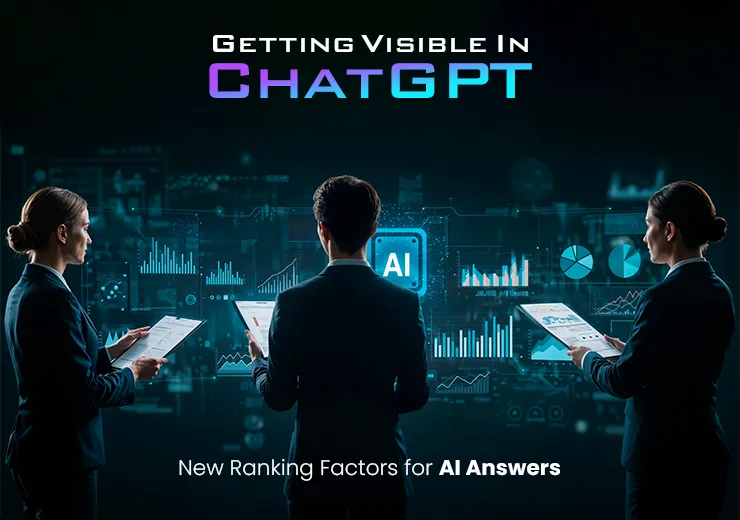
Where people used to "Google everything," they are now increasingly using ChatGPT or Google Gemini. They aren't looking for a list of links; they want an immediate, clear answer. The way people search is fundamentally changing. And this raises a new question that I frequently hear from clients:
Perhaps not literally. But traditional search behaviour is changing fundamentally. And there is an added complication: Google's business model is built on Google Ads. The first search results are increasingly sponsored placements, and younger generations, in particular, see right through that. They don't want ads. They want the right answer straight away.
This is precisely where an AI like ChatGPT gains ground. Not with ads, but with context. Not with ranking factors, but with knowledge, authority, and logical connections.
At ANA Digital Media, we treat this shift as the evolution of SEO, not its demise. Visibility now depends on making your content "AI-digestible."

GEO – Generative Engine Optimisation Tool
SEMrush AI Toolkit
Otterly AI Search Monitoring
Google Gemini - for content generation, analysis, and AI integrations

Websites like Wikipedia, government sites, national media, or educational platforms are frequently included in GPT training data. Being mentioned there significantly increases your visibility.
AI systems love experts. Those who consistently and deeply publish within a single theme are seen as an authority. Think knowledge bases, expert blogs, and sector analyses—the foundation of strong SEO.
Clear entity definitions via structured data (e.g., Person, Organisation, Product, FAQ) help AI recognise you and quote you correctly.
Your brand must be unambiguous online. From your Facebook Ads bio to your Google Business Profile. Inconsistency leads to confusion—and therefore invisibility. ANA Digital Media ensures your brand identity is rock-solid across all platforms.
Bullets, definitions, FAQ sections, and how-to structures are more likely to be included in AI answers. Write as if you are supplying input to a chatbot. This is essential for AEO.
For models with web browsing or up-to-date context (such as Bing Chat or ChatGPT Pro), the more recently you have been mentioned on the web, the better your chances.
Do you have a tool or service accessible via a GPT plugin, Microsoft Copilot, or an external AI assistant? This increases your visibility within the AI interface.
AI prefers content without a subjective slant. Neutral, factual, and well-substantiated information is more likely to be cited.
Wikipedia Page: One of the most powerful visibility triggers for ChatGPT.
Google Knowledge Panel: Often used as a source for factual questions about people and companies.
Social Media Consistency: Same name, bio, profile photo, and tone of voice across all channels (e.g., in your Meta Ads profiles).
Mention in Google Maps/Business Profiles: Especially vital for local entities.
Consistent Logo and Brand Colours: Increases recognition in AI visual systems.

FAQ Sections: Perfect for being included in AI answers in a Q&A format.
"What is..." Pages: Clear definitions score well in zero-shot prompts.
Lists and Bullets: Easily processed by AI.
Step-by-step Instructions: AI uses these for practical questions.
Glossaries / Knowledge Bases: Those who explain terms become a sour

Schema.org JSON-LD: Use for persons, products, organisations (ANA Digital Media uses this to define your service offerings).
Semantic HTML: Clear heading structure and content hierarchy.
Canonical and OG-Tags: Properly set up to avoid content confusion.
Use of Alt-Text and Titles for Media: AI is reading along.
Guest blogs on authoritative sites
Interviews in news media
Personal bios on event websites
Making podcast transcripts available
YouTube Videos with subtitles and descriptions
GPT Plugins: Have a plugin? There's a high chance your output will appear more often.
Microsoft Copilot Integrations: Are you cited as a source there?
Perplexity.ai Source Mentions: Is your content picked up in answers?
Making Your Own Tool Available via API: Good for tech visibility.
Search for your own name/company in ChatGPT
Use AI SEO tools (e.g., Writesonic, KeywordInsights)
Check who mentions you in Perplexity.ai and Bing Chat
Ensure your content is shared via AI-using platforms (such as Notion AI, Canva Magic Write, etc.)
What are the key differences between classic SEO and AI visibility via ChatGPT? See the comparison below:
| Classic SEO | ChatGPT Visibility (GEO) |
|---|---|
| Based on crawlers and indexation | Based on training data and prompts |
| Focus on keywords and backlinks | Focus on entities and contextual relevance |
| Rankings in search results | Answer selection in conversation form |
| Technique + content = ranking | Recognition + authority = mention |
| User chooses from links | User receives direct answers |
With SEO, you optimise for an algorithm that compares pages. With AI, you optimise for a model that attributes meaning. You are not found because you are "number 1," but because you are recognised as a reliable source.
Map Your Brand as an Entity: Ensure your brand, person, or service is named consistently online.
Build Topical Authority: Write consistently and deeply about your niche—AI recognises expertise.
Add Structured Data: Use Schema.org to help AI correctly understand your information.
Publish on Reliable Domains: Think Wikipedia, media, sector platforms—where AI trains.
Use AI-Friendly Formats: Think definitions, bullets, FAQs—ideal for answer models.
Stay Current: Update your content and ensure you are frequently mentioned online.
Monitor Your Visibility: Regularly test ChatGPT, Bing Chat, and Gemini for your own name.
Think Beyond SEO: Work on your brand, reputation, and presence in the AI ecosystem.
Gaining visibility in ChatGPT is not about tricks—it's about recognition, relevance, and authority. The more consistently you are present in valuable contexts, the greater the chance you will be mentioned. AI is not the deathblow to SEO. It is its evolution.
Work on your AI visibility today so you remain relevant tomorrow.
Do you want to get started with your AI visibility immediately? Check out our service ANA Digital Media AI Visibility & ChatGPT SEO for a concrete approach that makes your brand visible in AI answers from ChatGPT, Bing Chat, and Gemini.


Let our experts turn your goals into real results.

ⓒ Copyright 2026 . All Rights Reserved By ANA Digital Media