Practical, not theoretical: Built from real client work at Ana Digital Media — not copied from a generic template.


I hope you enjoy reading this article. If you need support with SEO , Google Ads , Facebook Ads, or Landing Pages, click on the link.
Most businesses don't fail at marketing because they lack ideas. They fail because they don't have a strategy. They post when they remember to, copy whatever a competitor did last week, and hope something sticks. A few reels go well, most don't, and after three months nobody knows why.
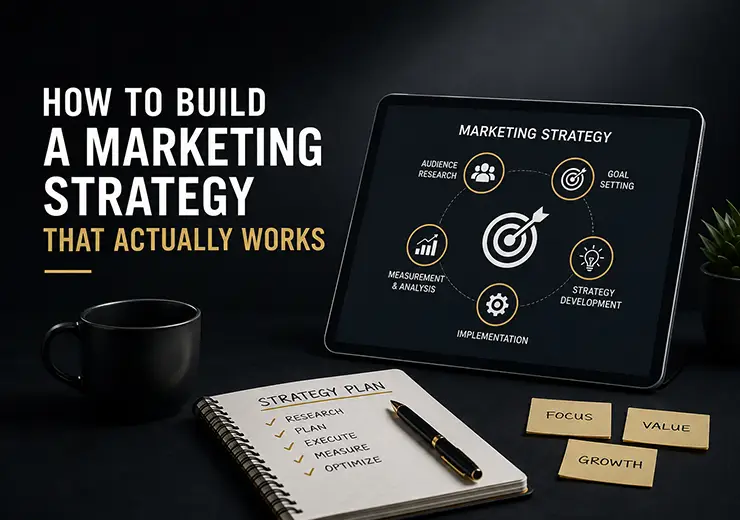
A real marketing strategy is different. It is not a mood board or a list of hashtags — it is a repeatable system: know your product, study your market, define your look and voice, and plan your content before you ever open a camera app. At Ana Digital Media, this is the exact process we use before we make a single post for any client, and it is the same process explained in this guide, in plain and simple language.
A strategy is not a one-time document. It's a system you check, follow and improve every single month.
Before we get into the framework, it helps to see where strategies usually break down. Marketers themselves point to the same handful of problems year after year — and almost none of them are about a lack of creativity.
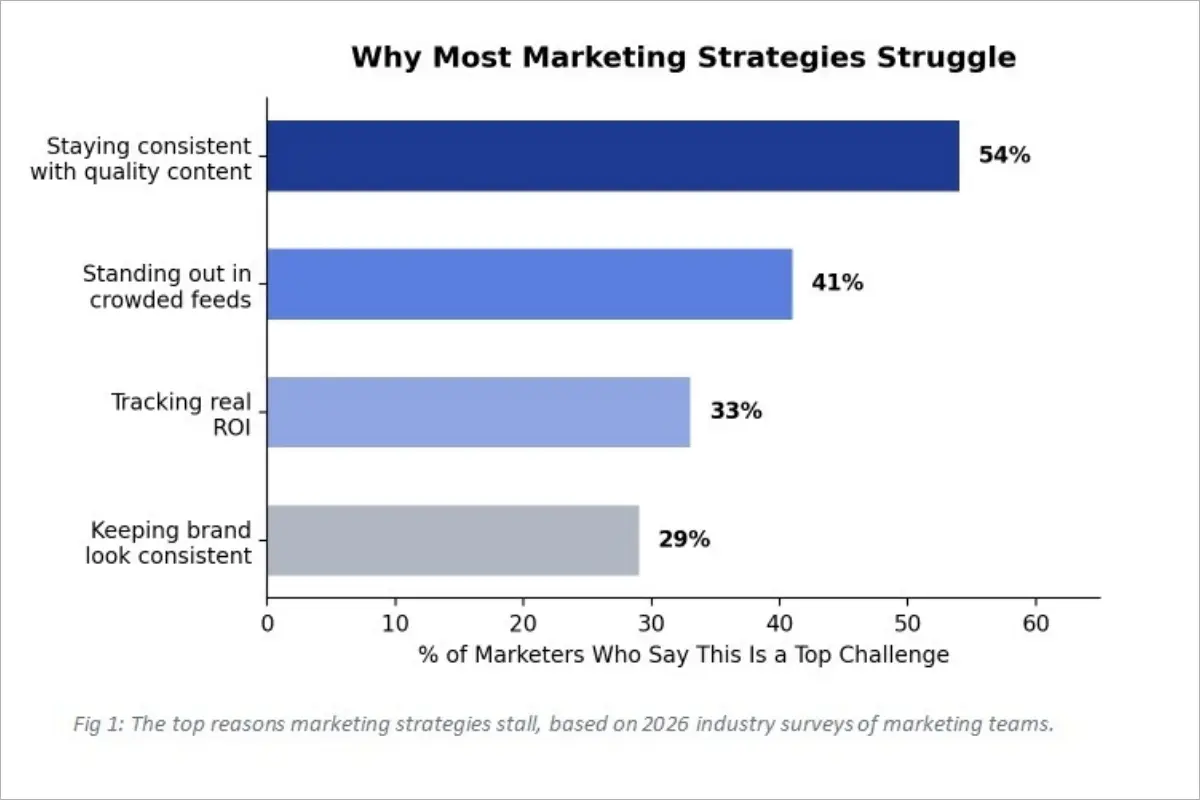
Notice that the biggest problem isn't a lack of ideas — it's consistency. Brands start strong, then quietly go quiet. A written strategy and a content calendar fix this at the root, because the guesswork is removed before the month even begins.
This is the exact order we follow. Each step feeds into the next one, so don't skip ahead — a strategy built out of order usually has to be redone.
Before touching a competitor's page or opening Canva, get brutally clear on what you're actually selling. What problem does it solve? Who is it for, and who is it not for? What do current customers say about it in their own words? Write this down — most brands think they know their product but have never actually written a one-page summary of it.
Pick 5–7 direct competitors — not the biggest brand in the industry, but businesses your size, targeting your audience. Look at what they post, how often, and which posts get the most comments and shares (comments matter more than likes). This isn't about copying; it's about understanding what the audience already responds to, so you're not starting from zero.
Pick 2–3 brand colours and 2 fonts (one for headings, one for body text) and use them everywhere — every post, every story, every ad. Visual consistency is what makes someone recognise your brand while scrolling without even reading the caption. Inconsistent visuals are one of the fastest ways to look unprofessional, even if the content itself is good.
Decide in one line how your brand talks: luxury and minimal, fun and youthful, expert and no-nonsense, warm and community-driven. This tone should show up in captions, comment replies, and even customer service messages. A brand that sounds different in every post confuses people before it convinces them.
Check how often competitors post, and on which days. Are they posting daily, three times a week, or in random bursts? Consistency (or the lack of it) directly explains why some competitor accounts grow steadily while others plateau — this is your benchmark for how often you need to show up.
For each competitor, note their unique selling point and what type of content they lean on most — reels, carousels, static posts, or a mix. This tells you what's already working in your space and where there's a gap nobody is filling yet — that gap is often your biggest opportunity.
Now combine everything: your product knowledge, competitor gaps, your visual identity, and your tone. Write one simple strategy document that states your goal, audience, content pillars, and posting frequency. This becomes the reference every future post is checked against.
Not every brand needs the same content mix. But the data is clear on which formats generally perform best right now.
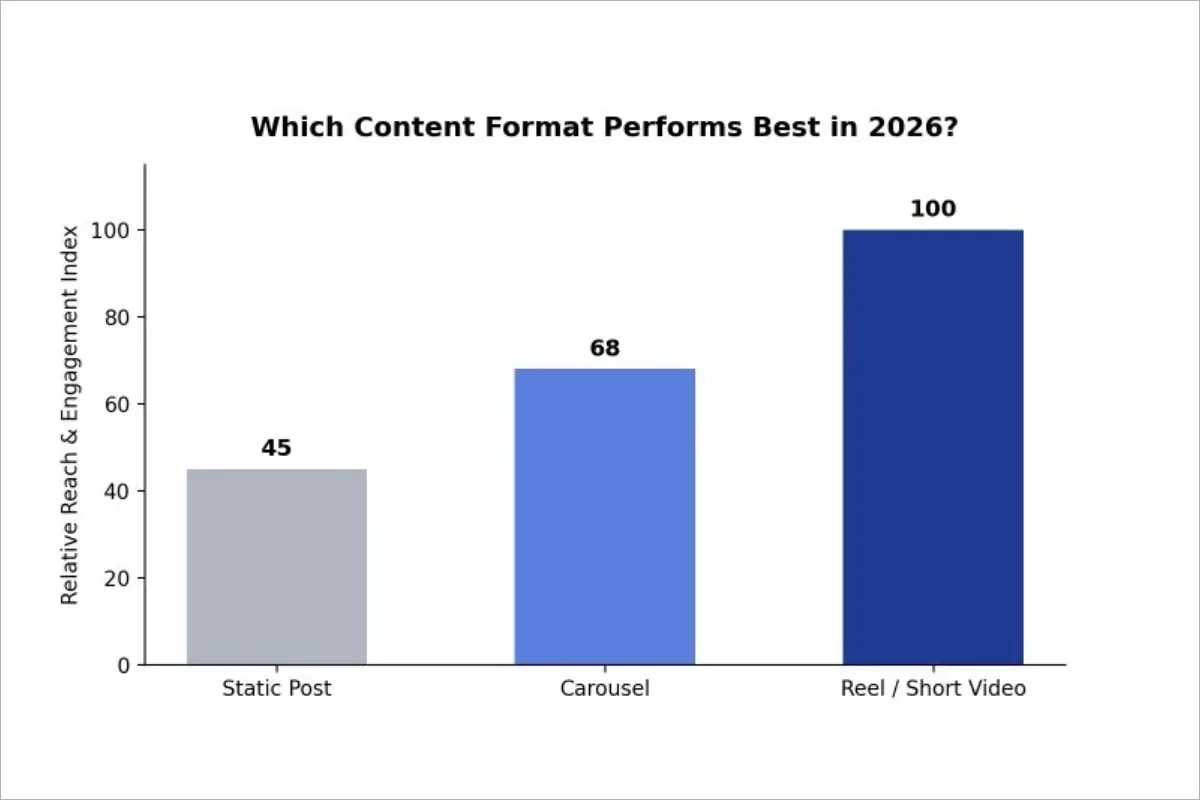
Reels and short videos are currently outperforming static posts by a wide margin, and carousels are a strong middle ground for educational or step-by-step content. That said, format should match your message — a detailed how-to often works better as a carousel than a 15-second video.
A strategy without a calendar stays a good idea on paper. Map out at least one month in advance, mixing formats and goals so every day has a clear purpose. Here's a simple weekly template you can adapt:
| Day | Content Type | Goal |
|---|---|---|
| Monday | Educational carousel (tip / how-to) | Build authority |
| Tuesday | Behind-the-scenes Reel | Build trust & relatability |
| Wednesday | Client result / testimonial post | Build proof |
| Thursday | Trending audio Reel (brand angle) | Grow reach |
| Friday | Static post — offer / USP reminder | Drive action |
| Saturday | Fun / relatable meme or poll story | Boost engagement |
| Sunday | Recap or community question | Start conversation |

Practical, not theoretical: Built from real client work at Ana Digital Media — not copied from a generic template.
A logical order: every step leads directly into the next one, so nothing gets missed.
Data-backed: competitor research and format choice are backed by 2026 industry data, not guesswork.
Works across industries: the same 9 steps work for a real estate brand, a fintech startup, or a township project.
1. Saves time: you always know what to post and why.
2. Builds brand recognition: every post reinforces the same look, voice, and message.
3. Improves ROI: you can see what's working and adjust before wasting budget.
4. Reduces dependency on one person: a documented plan means anyone on the team can execute it.
5. Keeps you ahead of competitors: you're building on data and competitor insight, not copying blindly.
Reading about a strategy is one thing — building and running one every month is another. At ANA Digital Media, we do this exact process for our clients: research, brand consistency, content planning, and calendars that are actually followed.
Want a marketing strategy built specifically for your brand? Get in touch with ANA Digital Media and let's plan your next quarter together.


Let our experts turn your goals into real results.
ⓒ Copyright 2026 . All Rights Reserved By ANA Digital Media