

I hope you enjoy reading this article. If you need support with SEO , Google Ads , Facebook Ads, or Landing Pages, click on the link.
For decades, appearing on the first page of Google was the holy grail of digital marketing. Businesses invested lakhs of rupees in SEO, content marketing, and paid ads — all built around one simple behaviour: a user types a query, Google shows ten blue links, and the user clicks through to a website.
That behaviour is now changing fundamentally. And if you are a business owner, marketer, or entrepreneur in India, this is something you cannot afford to ignore.
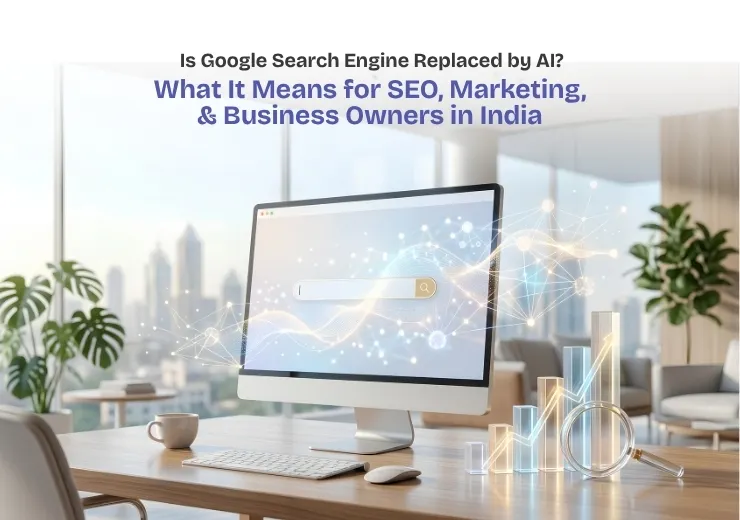
Google Search is not being shut down or removed — but it is being transformed beyond recognition. At Google I/O 2026, held on 19th May 2026, Google announced what it called the biggest change to its search box in over 25 years.
Google's I/O 2026 overhaul turns Search into an AI answer engine that keeps users on the results page. Zero-click searches now account for 60 per cent of queries, and publisher traffic is collapsing as a result.
AI Mode is now the default search experience. Over 1 billion users are already on AI Mode, and 48% of all queries now trigger an AI Overview — meaning nearly half of all searches no longer result in a click to any website at all.
In simple terms, Google is no longer primarily a directory that points users to websites. It is increasingly becoming an answer engine that resolves queries directly on the search results page — powered by Gemini AI — without the user ever needing to visit a single website.
The impact on organic website traffic has been severe for many businesses globally — and India is not immune.
Google AI Overviews now appear on 48% of all search queries as of early 2026 — a 58% increase year over year. Organic click-through rates drop between 34% and 61% when an AI Overview appears.
93% of AI Mode searches end without a single click to an external website. Some sites have already lost 20–60% of their organic traffic since AI features expanded.
Individual publishers have been hit hard. HubSpot estimates it lost 70 to 80 per cent of its organic traffic. Chegg, the education platform, reported a 49 per cent decline. DMG Media documented drops as steep as 89 per cent for some queries.
For Indian businesses that have built their digital growth on organic search traffic — whether through blogs, service pages, or e-commerce listings — these numbers should serve as a serious wake-up call.
Google AI Mode is already live in India, and it is fundamentally changing how people search for businesses, products, and services. Most Indian business owners have no idea this is happening.
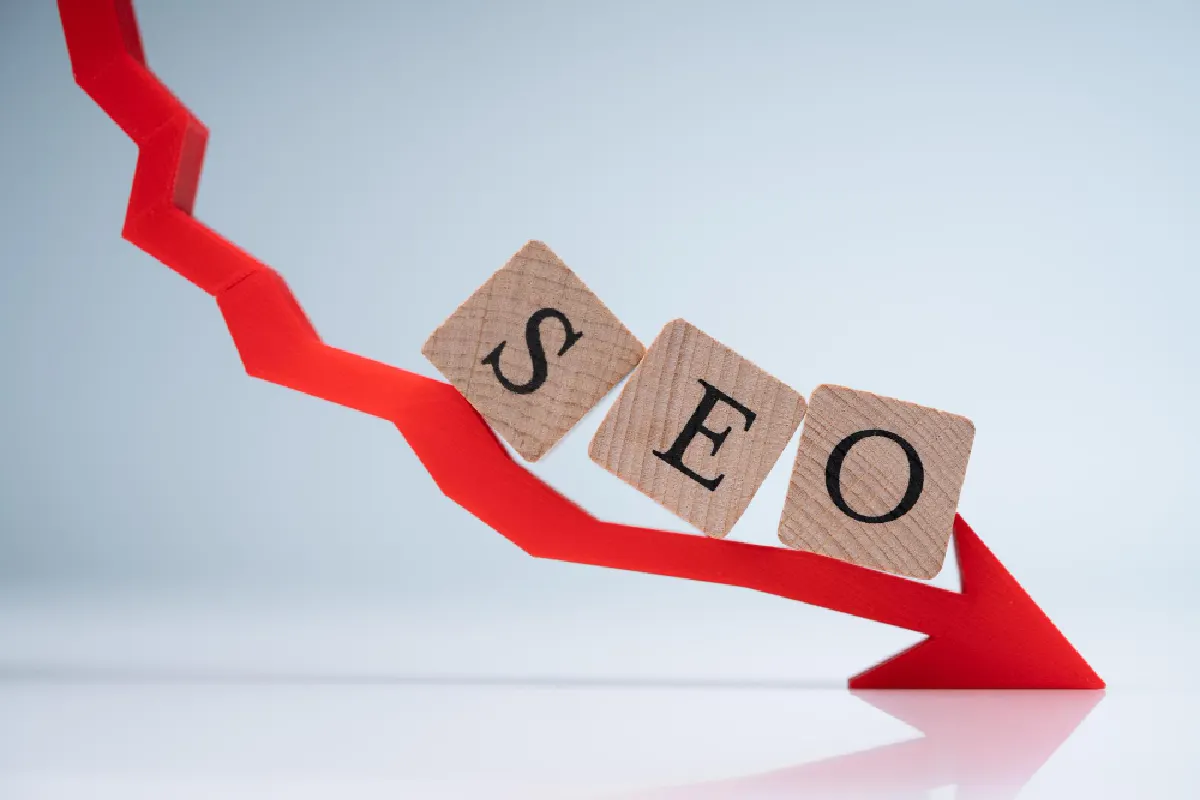
No — but the old version of SEO is dying fast.
What is dying is the old SEO rulebook. Earlier, publishing dozens of low-effort blogs and targeting easy keywords were alone effective to drive traffic and rankings. But now, that approach no longer delivers sustainable results. SEO today is less about manipulating algorithms and more about earning trust, authority, and visibility across multiple search environments.
Google said it directly at I/O 2026: optimise for search, and AI search comes with it. The shift is not from SEO to a completely different discipline — it is from narrow SEO focused on rankings and traffic, to total search visibility that includes rankings, AI citations, AI share of voice, and pipeline influence, treated as one unified system.
The businesses that will survive and thrive in this new landscape are those that shift from simply trying to rank — to actively working to become the source that Google's AI cites in its answers.
Sites cited in AI Overviews see a 35% increase in clicks compared to non-cited top-ten results, with traffic converting at 14.2% versus 2.8% for traditional organic results. Being cited by AI is the new page one.
For businesses running Google Ads and Meta Ads, the picture is more nuanced.
E-commerce queries see AI Overviews only 4% of the time — Google recognises that product purchases require clicking. For commercial content, traditional SEO tactics remain highly effective. AI Overviews appear in only about 8% of local searches, meaning Google Business Profile optimisation and local SEO fundamentals are still a priority.
This means that paid advertising and local search remain strong channels — particularly for Indian businesses targeting customers in specific cities or regions. However, informational content that once drove top-of-funnel traffic is under serious pressure, and marketing strategies need to evolve accordingly.
The financial services sector in India has been one of the highest-volume beneficiaries of informational content marketing. Much of this traffic is now at risk due to AI rendering financial calculators and comparison tools directly on Google. The same applies to industries such as education, healthcare, real estate, and legal services — all of which have historically relied heavily on informational search traffic.
The good news is that adaptation is entirely possible — and those who move early will gain a significant competitive advantage.
Focus on becoming a cited source, not just a ranked page. Create content that is genuinely authoritative, specific, and structured in a way that AI systems can easily extract and cite. Answer questions clearly, use structured data and schema markup, and build genuine topical authority in your niche.
Invest in brand authority. In 2026, your SEO strategy is also, in part, a brief for how you want to appear inside an AI answer. Businesses with strong, well-known brands are more likely to be cited by Google's AI — making brand building a direct SEO strategy.
Do not abandon paid advertising. With organic click-through rates falling sharply for informational queries, Google Ads and Meta Ads become even more important as reliable, controllable channels for reaching your target audience and driving traffic to your landing pages.
Build direct customer relationships. Email marketing, WhatsApp broadcasts, and social media followings are assets you own — unlike Google traffic, which can disappear overnight with an algorithm change. Diversifying your customer touchpoints is more important now than ever.
Audit your content immediately. Check Google Search Console to identify which pages are losing clicks due to AI Overviews. Prioritise improving pages that target transactional and commercial intent, as these are far less affected by AI summaries than informational content.
Google Search is not disappearing. But the version of Google that reliably sent traffic to your website in exchange for good rankings is being fundamentally restructured. The businesses that treat this as a crisis will fall behind. Those that treat it as an opportunity to build genuine authority, create truly valuable content, and diversify their marketing channels will emerge stronger.
For Indian businesses especially, the window to adapt is right now — before the full impact of these changes is widely felt across the market.
At ANA Digital Media, we help Indian businesses navigate exactly these kinds of shifts — with smart SEO Strategies, high-converting Google Ads and Meta Ads campaigns, powerful Landing Pages, and compelling Graphic Design that builds trust and drives results.
Get in touch with ANA Digital Media today and let us help you stay ahead in India's fast-changing digital landscape.


Let our experts turn your goals into real results.
ⓒ Copyright 2026 . All Rights Reserved By ANA Digital Media