Navigation menu with many links


I hope you enjoy reading this article. If you need support with SEO , Google Ads , Facebook Ads, or Landing Pages, click on the link.
A landing page is a web page specifically designed to get visitors to take one clear action — such as requesting a quote, purchasing a product, or downloading a free guide.
Unlike ordinary web pages, a landing page has one single goal and as few distractions as possible. Everything on the page is focused on conversion.
Landing pages are commonly used for Google Ads, SEO, social media campaigns, and email marketing. The visitor arrives on the page with a specific expectation already in mind.
When the message, content, and call to action align closely with that expectation, the likelihood of a visitor becoming a customer or lead increases significantly.
In this article, ANA Digital Media explains exactly what a landing page is, when to use one, and which elements determine whether a landing page converts or not. We also show you how to structurally improve a landing page for more leads and sales.
A landing page is a web page specifically designed to get visitors to take one clear action. That might be requesting a quote, downloading an e-book, signing up for a demo, or purchasing a product.
Unlike a regular web page, a landing page is not primarily about informing visitors — it is about directing them towards one single conversion goal.
The most important characteristic of a landing page is that it fully aligns with the intent with which someone arrives on the page.
When someone searches on Google for "digital marketing agency in Mumbai" and clicks on a result, that visitor immediately expects relevant information about digital marketing services, results, expertise, and a logical next step, such as booking an introductory call.
An effective landing page responds to this directly — with a clear headline, trust-building elements, and a prominent call to action.
In practice, landing pages are frequently used for marketing campaigns such as Google Ads, Meta Ads, email marketing, and SEO-targeted pages. Businesses typically create separate landing pages for different campaigns so that the message, offer, and call to action align precisely with the target audience and search intent.
A simple way to understand the difference is through this example:
Homepage: provides a general overview of the business, its services, and navigation to various pages across the website.
Landing page: focuses entirely on one goal — for example, "Request a Free SEO Audit."
Because of this focus, landing pages can often convert considerably better than standard web pages. Visitors spend less time searching, understand the purpose of the page more quickly, and are clearly guided towards the next step. This makes landing pages a critical component of effective online marketing and conversion rate optimisation.
A landing page has one clear goal. Unlike ordinary web pages, a landing page is entirely focused on one action — such as requesting a quote, booking a demo, or purchasing a product.
Relevance and focus increase the likelihood of conversion. When the content of a landing page directly aligns with the search intent or advertisement that brought a visitor to the page, it becomes much easier to guide them towards taking action.
Structure and trust play a major role. Elements such as a clear headline, a strong call to action, customer reviews, and a logical flow help visitors make a decision more quickly and with greater confidence.
Optimisation is essential for better results. By continuously testing and improving landing pages based on user data, you can increase your conversion rate and extract more return from every marketing campaign.
The difference between a landing page and a regular web page lies primarily in how visitors are guided through the page. A regular web page is generally designed to encourage visitors to explore a website. It therefore typically contains an extensive navigation menu, multiple topics, and links to various other pages.
A landing page has a far more focused structure. The content, the order in which information is presented, and the call to action are all specifically designed to guide visitors step by step towards one single action. Rather than offering multiple options, the page helps visitors make a decision more quickly and with less friction.
In practice, the difference looks something like this:

Navigation menu with many links
Information covering multiple topics or services
Links to various pages within the website
Designed for exploration and orientation
A clear headline that immediately explains the offer
Content focused on one specific need or question
Trust elements such as reviews or client case studies
One single, prominent call to action
A practical example: imagine someone clicks on an advertisement for a free digital marketing audit. If this visitor lands on a general web page, they must first search for the relevant information themselves. If they land on a dedicated landing page that immediately explains what the audit includes, what insights they will receive, and how to request it, the next step becomes far clearer and more compelling.
Precisely because a landing page has fewer distractions and its content is focused on one goal, it helps visitors take action more quickly. This is why landing pages are so widely used in campaigns where conversion is the primary objective.
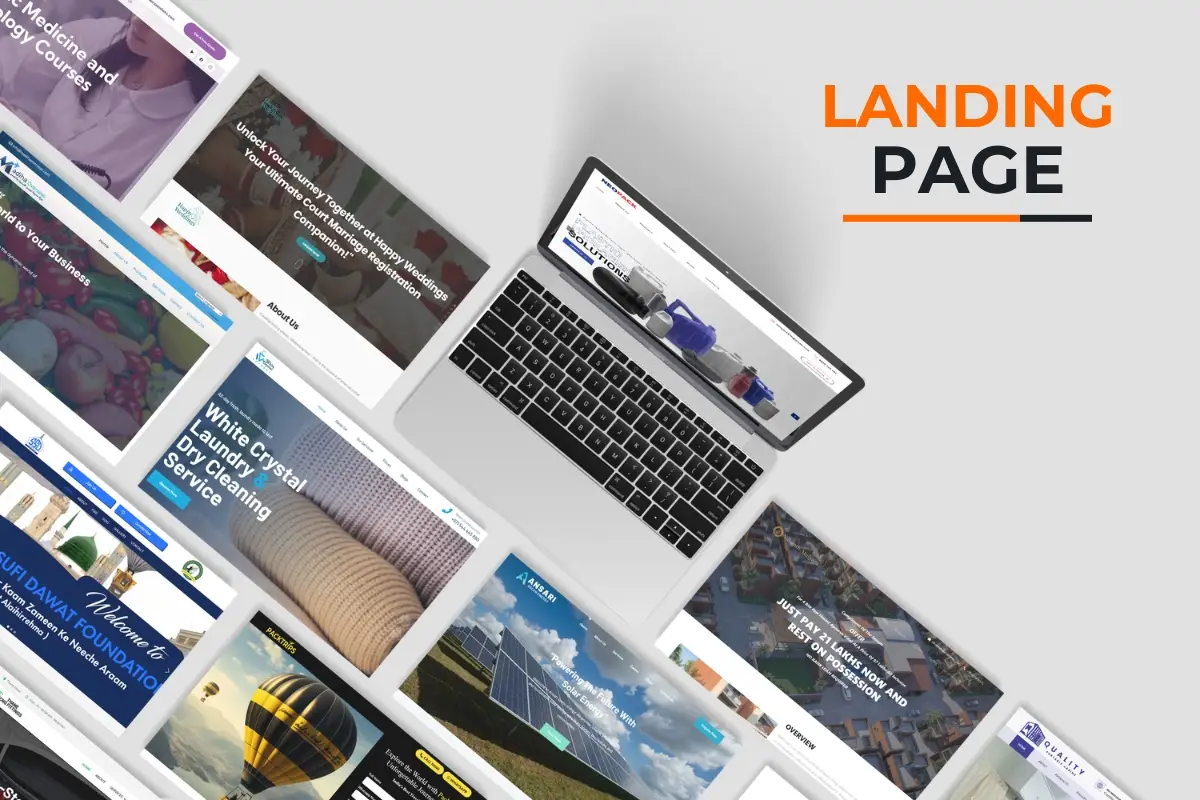
The goal of a landing page is to guide visitors towards one specific action. In online marketing, this action is referred to as a conversion. It might be requesting a quote, signing up for a newsletter, downloading a white paper, or purchasing a product. Rather than giving visitors multiple choices, a landing page is designed so that everything on the page supports taking that one step.
An important principle here is that the content of the landing page must align with the intent with which someone arrives on the page. When a visitor clicks on an advertisement with the text "Free Google Ads Audit", they expect to find information on the landing page about exactly what that audit involves, what they will receive, and how to request it. If this information is missing or unclear, visitors will typically leave the page quickly without converting.
An effective landing page therefore, generally has three clear functions:
Explaining the value of the offer Visitors must understand within a matter of seconds what you are offering and why it is valuable to them specifically.
Building trust Elements such as reviews, client case studies, industry certifications, or measurable results help remove doubts and reassure the visitor that they are making a sound decision.
Making the next step clear A clear call to action, such as "Book a Free Consultation" or "Request a Quote" makes it straightforward for visitors to take action without confusion or hesitation.
When these three elements work well together, a landing page can make a significant difference to marketing results. Businesses therefore, typically create separate landing pages for campaigns in Google Ads, SEO, and social media — so that the message and offer align precisely with the target audience and search intent. This not only increases the likelihood of conversion but also improves the overall return on marketing investment.
Landing pages are important because they help visitors make a decision more quickly. When someone clicks on an advertisement or a search result, that person typically already has a specific question or need in mind. If the page they land on directly addresses that expectation, the probability of them taking action increases considerably.
Many businesses lose conversions because visitors land on general web pages. There, they must search for information themselves, navigate through multiple pages, or feel uncertain about what their next step should be. This creates friction in the customer journey. A landing page removes this friction by structuring all information around one clear goal.
A well-designed landing page increases conversions primarily for three reasons:
Immediate relevance for the visitor The message aligns precisely with the advertisement, search term, or campaign that brought someone to the page in the first place.
Fewer distractions Navigation and additional links are minimised, which means the visitor's attention remains focused on one action.
A clear next step A strong call to action immediately makes it obvious what the visitor can do — whether that is booking a consultation, placing an order, or downloading a resource.
A practical example: imagine a business is running ads for the search term "Google Ads agency in Delhi." When a visitor clicks on the ad and lands on a general homepage, they must search for relevant information themselves. If that same visitor lands on a dedicated landing page showcasing results, client case studies, and a prominent "Book a Strategy Call" button, the next step becomes far clearer and far more likely to happen.
This is precisely why so many businesses use landing pages for their SEO, Google Ads, Meta Ads, and email marketing campaigns. By aligning the content precisely with the visitor's intent, the likelihood of that visitor converting into a lead or customer increases significantly.
You use a landing page when you want to direct visitors towards one clear action. This typically happens in marketing campaigns where a visitor already has a specific intent — such as looking for a solution, comparing options, or requesting a service. By creating a dedicated landing page that aligns precisely with that intent, you increase the likelihood that visitors will actually convert.
In practice, landing pages are used in three main situations.
For Google Ads and Other Paid Advertising When someone clicks on an advertisement, they expect to find information that directly matches the ad copy. If an advertisement is about "SEO services for e-commerce businesses in India", a landing page specifically showcasing SEO services, demonstrable results, and a booking option will perform far better than a general homepage. This not only improves conversion rates but can also improve the Quality Score of your advertisements in Google — which directly reduces your cost per click.
For SEO-Targeted Pages Landing pages are also frequently created in search engine optimisation for specific search queries. Think of pages targeting terms such as "digital marketing agency in Bangalore" or "Google Ads specialist in Pune." These pages are optimised for a clear search intent and help guide visitors from Google directly to a page that is immediately relevant to what they are looking for.
For Email and Social Media Campaigns When you send a campaign via email or promote something on social media platforms such as Instagram, Facebook, or LinkedIn, you do not want to direct visitors to a generic page. A landing page can be focused specifically on one offer — such as a webinar registration, a limited-time promotion, or a free downloadable resource. This makes the message clearer and increases the likelihood that visitors will take the desired action.
By creating separate landing pages for different campaigns, you can tailor the content, message, and call to action more precisely to the target audience. This not only makes marketing campaigns more effective but also allows you to measure more accurately which pages and campaigns are delivering the best results for your business.
An effective landing page typically follows a clear structure that guides visitors step by step towards a conversion. Rather than presenting information randomly, the content is organised logically so that visitors quickly understand what you offer, why it is relevant to them, and what action they can take.
Most high-converting landing pages consist of a number of consistent elements.
Hero Section With Headline and Value Proposition At the top of the page, it must be immediately clear what you offer and who it is for. A strong headline, a brief explanation, and a prominent call to action ensure that visitors understand the value of your offer within seconds of arriving on the page.
Explaining the Problem and the Solution After the introduction, it is important to demonstrate which problem you solve and how your product or service addresses it. When visitors recognise their own situation in the content, the likelihood that they will continue reading and take action increases significantly.
Benefits and Key Features Here you explain why your solution is worth considering. Think of concrete benefits, measurable results, or unique characteristics. This helps visitors compare your offering with available alternatives and understand what sets you apart.
Social Proof and Trust Elements Elements such as customer reviews, industry certifications, client case studies, or measurable results help build trust. Visitors see that other customers — ideally including recognisable Indian brands or businesses similar to their own — have already had positive experiences with your product or service.
A Clear Call to Action A landing page must always conclude with a clear next step — such as "Book a Free Strategy Consultation" or "Request a No-Obligation Quote." The simpler and more obvious this step is, the greater the likelihood that visitors will complete it.
Research by HubSpot indicates that landing pages with a clear structure and one primary call to action significantly increase the likelihood of conversion, because visitors face fewer distractions and more quickly understand what their next step should be.
By following this structure, you make your landing page not only more organised and easier to navigate, but you also help visitors make a decision more quickly and with greater confidence.
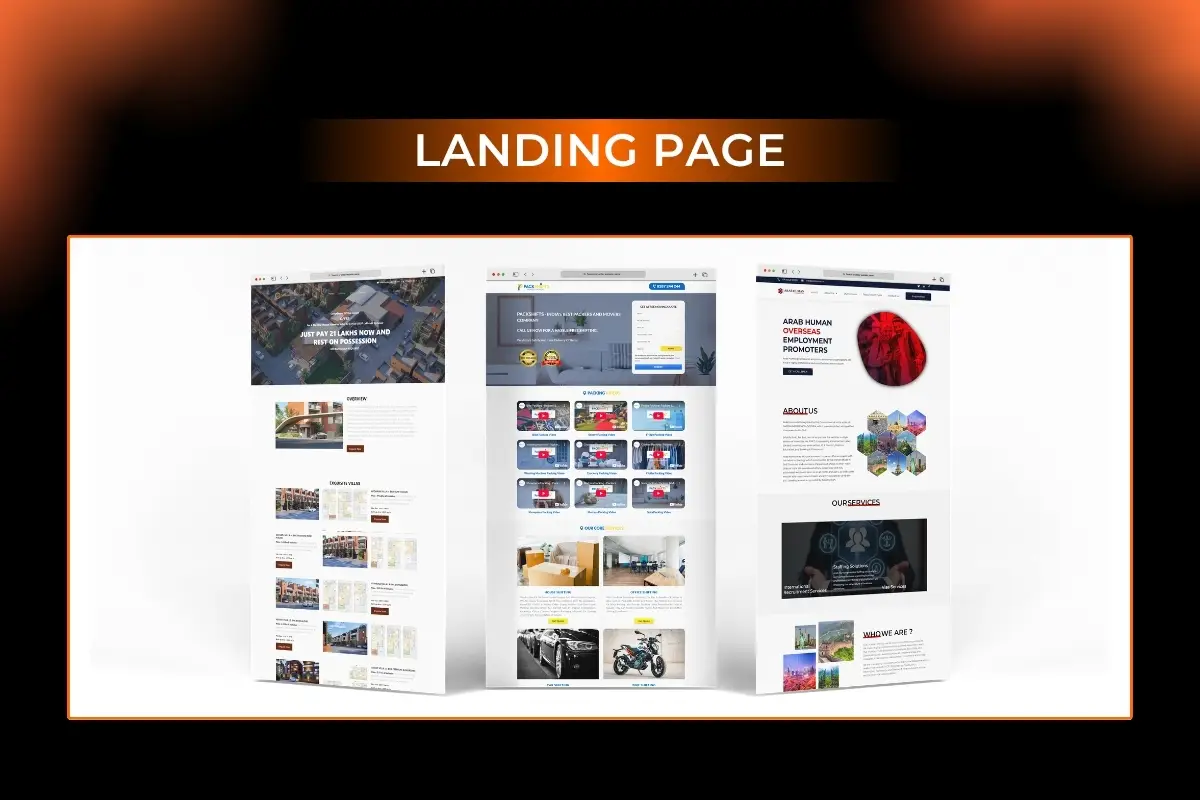
A landing page does not convert well through attractive design alone — it converts through a combination of clear communication, trust-building, and user-friendliness. Visitors often decide within seconds whether a page is relevant to them. The most important elements must therefore be immediately visible and quickly communicate the value of what is being offered.
A Strong Headline and Clear Value Proposition The headline at the top of the page often determines whether visitors continue reading. Within a few seconds, it must be clear what you offer, who it is for, and which problem it solves. The more concrete and specific the value proposition, the greater the likelihood that visitors will remain engaged and read further.
A Clear Call to Action A landing page always has one primary action — such as requesting a quote, booking a demo, or purchasing a product. The call to action must be clearly visible and tell visitors exactly what they will receive when they click. Examples include "Book a Free Strategy Call" or "Get Your Free Digital Marketing Audit."
Trust and Social Proof Visitors want reassurance that they are making a good decision. This is why elements such as customer reviews, client case studies, industry certifications, statistics, or recognisable client logos are so important. These signals demonstrate that other customers have already had positive experiences and help remove any remaining doubts or hesitations.
A Clear Structure and Scannable Content Many visitors do not read a landing page in full — they scan the content. Short paragraphs, clear headings, and a strong visual hierarchy make it easier to absorb information quickly. This allows visitors to find what they are looking for more quickly, which increases the likelihood of them taking action.
Speed and Mobile-Friendliness Technical factors also play a critical role. In India, a significant and growing proportion of web traffic comes from mobile devices — making this particularly important. When a page loads slowly or performs poorly on a smartphone, visitors will leave before they have even read the content. A fast, mobile-friendly page ensures that visitors can navigate through the content without friction and complete a conversion with ease.
By optimising all of these elements together, you create a landing page that is not only visually appealing but also effectively guides visitors towards a conversion. This is why successful landing pages are regularly tested and improved based on user behaviour and conversion data.
A good landing page is created when every element on the page is focused on one goal: getting a visitor to convert. This means the content, structure, and call to action must fully align with the reason someone arrives on the page. When the message is immediately relevant to the visitor, the likelihood of conversion increases considerably.
A practical way to build an effective landing page is to follow these steps.
Define One Clear Conversion Goal A landing page works best when it focuses on one single action — such as requesting a quote, booking a demo, or purchasing a product. When a page has multiple goals, visitors are forced to choose, and the likelihood of conversion decreases.
Ensure the Headline Aligns With the Search Intent The headline must immediately make it clear that the visitor is in the right place. For example, a headline such as "Google Ads Management for E-Commerce Businesses in India" will typically perform far better than a vague, generic statement such as "Welcome to Our Marketing Agency."
Quickly Demonstrate Why Your Solution is Better Visitors scan a page before they read it. Make your most important advantages immediately visible — for example:
Proven, measurable results
Specialist expertise in your specific industry or niche
Concrete figures, case studies, or client success stories
This helps visitors build confidence in your offering more quickly.
Reduce Doubts With Proof Many visitors hesitate before taking action. By adding reviews, client case studies, industry certifications, or relevant statistics, you demonstrate that others have already had positive experiences with your business. In the Indian market, testimonials from well-known local brands or businesses in similar industries can be particularly persuasive and reassuring.
Optimise and Test the Page Continuously Even small adjustments can have a significant impact on conversion rates. Consider testing:
Different headlines
Alternative call to action texts
Shorter contact forms
A different order of content sections
By testing regularly, you discover which version of the landing page delivers the best results — and you continuously improve your return on marketing investment over time.
Create Clear Visitor Segments Not every visitor has the same intent. By segmenting visitors, you can personalise more precisely and meaningfully.
Many landing pages attract visitors but convert poorly because of errors in the structure or content. Often, it is not one single major problem but a collection of small obstacles that cause visitors to hesitate or leave without taking action. By recognising and avoiding these mistakes, you can significantly improve the effectiveness of a landing page.
Too Many Choices for the Visitor A landing page works best when it presents one clear action. When multiple buttons, links, or navigation options are present, visitors become less certain about which step to take. This can result in them leaving the page without acting at all — a phenomenon sometimes referred to as decision paralysis.
An Unclear Value Proposition When visitors do not immediately understand what you offer or why it is relevant to them, they will typically leave quickly. The headline and introduction must therefore immediately make clear which problem you solve and what the visitor stands to gain by taking action.
Insufficient Trust on the Page Visitors do not make decisions lightly. When a landing page shows no reviews, client case studies, certifications, or results, doubt can arise about the credibility of the offer. Trust-building elements are essential for overcoming this hesitation — particularly in the Indian market, where word-of-mouth recommendations and peer validation carry significant weight in purchasing decisions.
Long Forms or Complicated Steps The more information visitors are required to fill in, the greater the likelihood that they will abandon the process. Ask only for the information that is genuinely necessary for the next step. Shorter, simpler forms consistently generate more submissions than lengthy ones.
A Poor Mobile Experience A large and growing proportion of web traffic in India comes via mobile devices — particularly in Tier 2 and Tier 3 cities, where smartphones are the primary means of accessing the internet. When a landing page loads slowly, is difficult to read, or is cumbersome to use on a smartphone, many visitors will leave before they convert. A fast, mobile-optimised landing page is therefore not optional — it is essential.
By avoiding these mistakes, your landing page becomes more organised, clearer, and more user-friendly. This makes it easier for visitors to understand the content and make a decision more quickly and confidently.
A landing page only truly performs well when it is both found in search engines and capable of converting the visitors it attracts. This combined approach is often referred to as SXO — Search Experience Optimisation. It brings together SEO, usability, and conversion rate optimisation to not only generate traffic, but to ensure that traffic actually delivers results for your business.
In practice, there are a number of concrete optimisations that make a meaningful difference.
Focus the Page on One Clear Search Intent Successful landing pages focus on one specific search query or campaign. The page title, headline, and content must immediately demonstrate that the page directly addresses what the visitor is looking for.
For example, a page targeting "Google Ads agency in Hyderabad" should immediately show:
What results have you achieved for clients
Which types of businesses do you work with
How can someone book a consultation or get in touch
The more closely the content aligns with the search intent, the greater the likelihood that visitors will convert.
Structure the Page According to a Conversion Logic High-converting landing pages typically follow the same logical sequence:
A clear headline and value proposition
An explanation of the visitor's problem or challenge
Your solution and its key benefits
Proof such as reviews, case studies, or measurable results
A clear and prominent call to action
This structure helps visitors process information more quickly and makes it easier for them to reach a confident decision.
Optimise for Speed and Mobile-First Use Technical performance has a direct impact on both SEO and conversion rates. When a page loads slowly or performs poorly on mobile devices, visitors will often leave before they have read any of the content.
In India, where mobile internet usage is exceptionally high, and network speeds can vary significantly across regions, a fast and mobile-optimised landing page is absolutely critical. Google also uses page speed and mobile usability as ranking factors, making this equally important for your SEO performance.
Place the Call to Action Strategically Throughout the Page A call to action works best when it appears multiple times at logical points throughout the page. For example:
At the top of the page, in the hero section
After a section highlighting key benefits
At the bottom of the page, after trust elements and social proof
This means a visitor can take action at whichever point in the page they feel ready to do so — rather than having to scroll all the way back to find the button.
Use Data to Continuously Improve A landing page is never truly finished. By analysing where visitors drop off in the page, you can make targeted improvements that have a real impact on your conversion rate. Many businesses regularly test:
Different headlines and sub-headings
Alternative call to action texts and button colours
Shorter or differently structured contact forms
A different order of content sections
Even small, seemingly minor adjustments can have a surprisingly large impact on conversion rates — and the cumulative effect of continuous testing over time can be transformative for your marketing results.
A landing page is a page entirely focused on one goal: converting visitors. Unlike regular web pages, a landing page contains fewer distractions and guides visitors step by step towards a clear action — such as requesting a quote, booking a demo, or making a purchase.
The effectiveness of a landing page depends primarily on three factors: a clear value proposition, a logical and well-structured layout, and sufficient trust-building elements to reassure the visitor. When the content closely aligns with the search intent or marketing campaign that brought someone to the page, visitors understand their next step more quickly — and the likelihood of conversion increases significantly.
For businesses operating in India's competitive digital landscape, it is therefore essential not to treat landing pages as ordinary web pages, but as a strategic component of their overall marketing approach. By creating landing pages specifically tailored to campaigns, target audiences, and search intents, you can generate more leads, improve the quality of your enquiries, and increase the return on every rupee invested in your marketing.
At ANA Digital Media, we specialise in creating and optimising landing pages that are designed to convert — combining compelling graphic design, strategic SEO, and data-driven insights to help Indian businesses grow online.
Get in touch with ANA Digital Media today to find out how a well-built landing page can transform the results of your marketing campaigns.


Let our experts turn your goals into real results.
ⓒ Copyright 2026 . All Rights Reserved By ANA Digital Media